

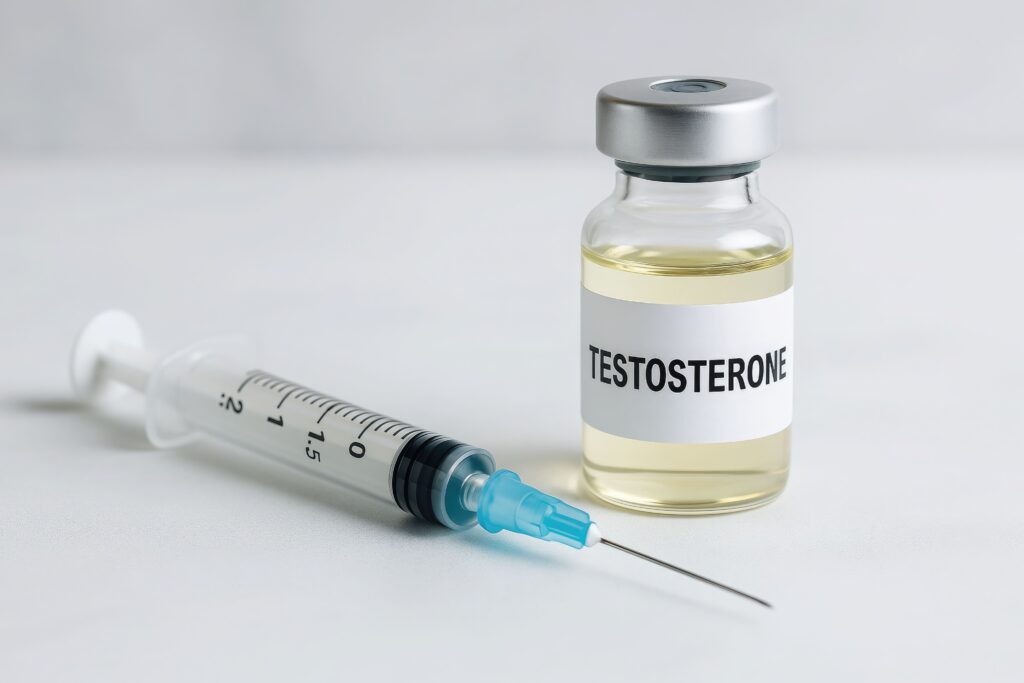
When people search for the best peptides for testosterone, the first problem is usually the word “best.” The term covers compounds that act at very different points in the body, and some are not testosterone compounds at all. A useful comparison therefore starts with the pathway involved, the outcome actually measured, and the strength of the evidence behind it.
The pathway changes the question
Testosterone production is part of the hypothalamic pituitary gonadal axis. Signals move from the hypothalamus to the pituitary and then to the testes.
That means a compound acting higher in the chain depends on the parts below it responding properly. A compound working closer to the testes raises a different research question.
The source groups the compounds discussed into several broad categories:
| Group | Main area of action | What research may measure |
| Kisspeptin | Reproductive signaling | LH, FSH and testosterone |
| hCG | Gonadal signaling | Testosterone production |
| Gonadorelin | GnRH signaling | LH and FSH responses |
| GnRH or LHRH agonists | Hormonal axis manipulation | Changes in testosterone over time |
| Growth hormone secretagogues | Growth hormone axis | GH and IGF 1 rather than testosterone |
| PT 141 | Melanocortin receptors | Sexual function rather than testosterone |
That table makes one point clear. These compounds should not be treated as though they belong to one uniform treatment category.
What does “increase” actually mean?
A change in best peptides for testosterone is only one possible measurement.
Researchers may also look at LH, FSH, free testosterone, SHBG, or estradiol. Each marker tells a different part of the story.
A rise in LH, for example, shows that the pituitary has responded to a signal. It does not automatically mean that testosterone will rise in the same way or remain elevated.
Timing matters too. Testosterone follows a daily pattern, so the point at which blood is measured can affect the number being reported.
A headline result without those details can be surprisingly misleading.
The evidence does not point to one universal winner
The source’s central point is that testosterone related peptide research contains several different biological stories.
hCG has evidence in a narrow clinical setting involving suppressed gonadotropins. Kisspeptin has evidence showing an upstream reproductive response, while questions about lasting effects remain open. Gonadorelin depends heavily on its delivery pattern. GnRH agonists can raise testosterone briefly before suppressing it. Other compounds frequently grouped into the discussion act outside the testosterone pathway altogether.
That makes a universal “best” label difficult to defend.
For readers comparing these compounds, the more useful question is not which name sounds strongest. It is which pathway is being studied, what was actually measured, and how far that evidence can reasonably be taken. That shift from ranking to evidence makes the comparison much clearer.